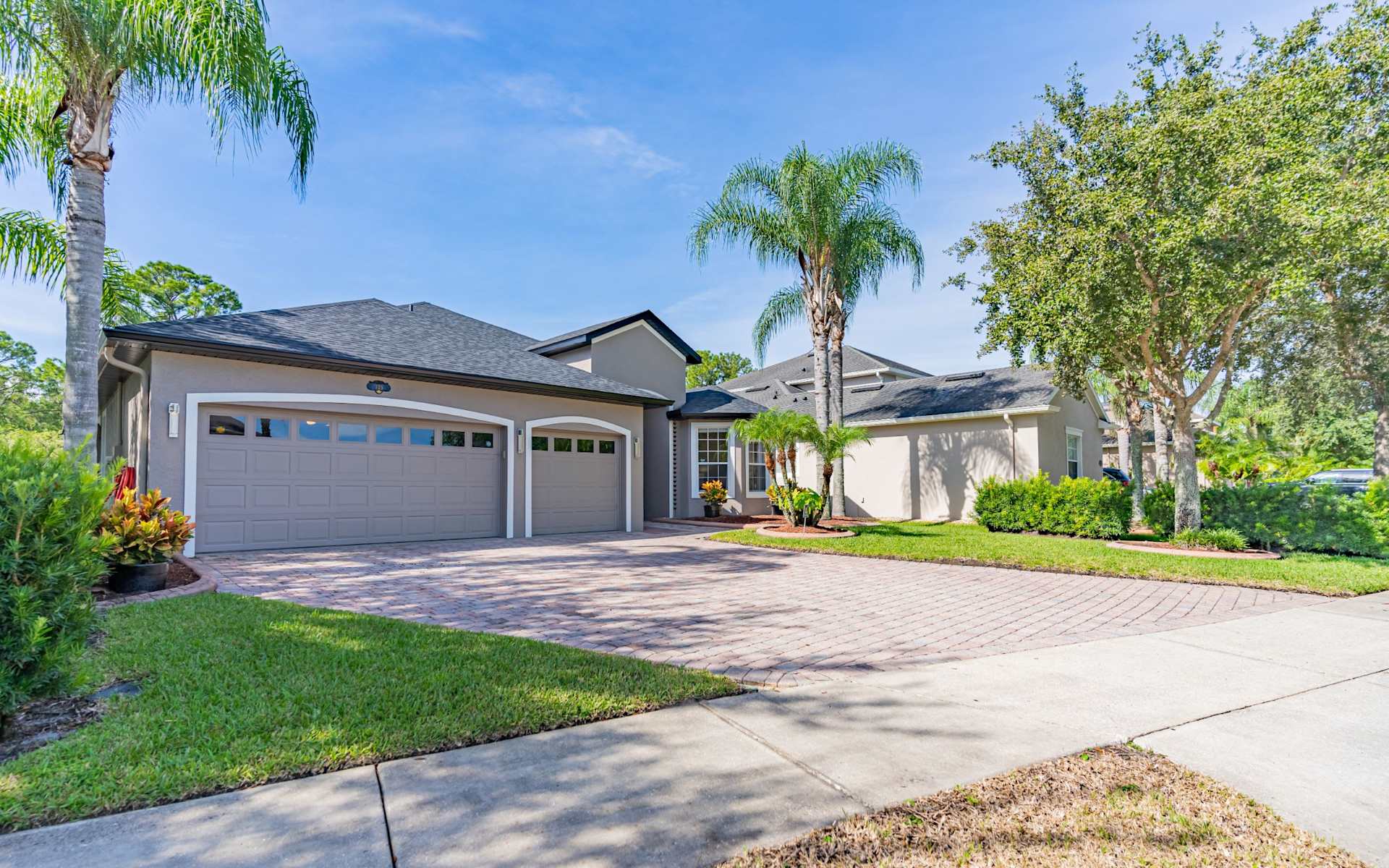
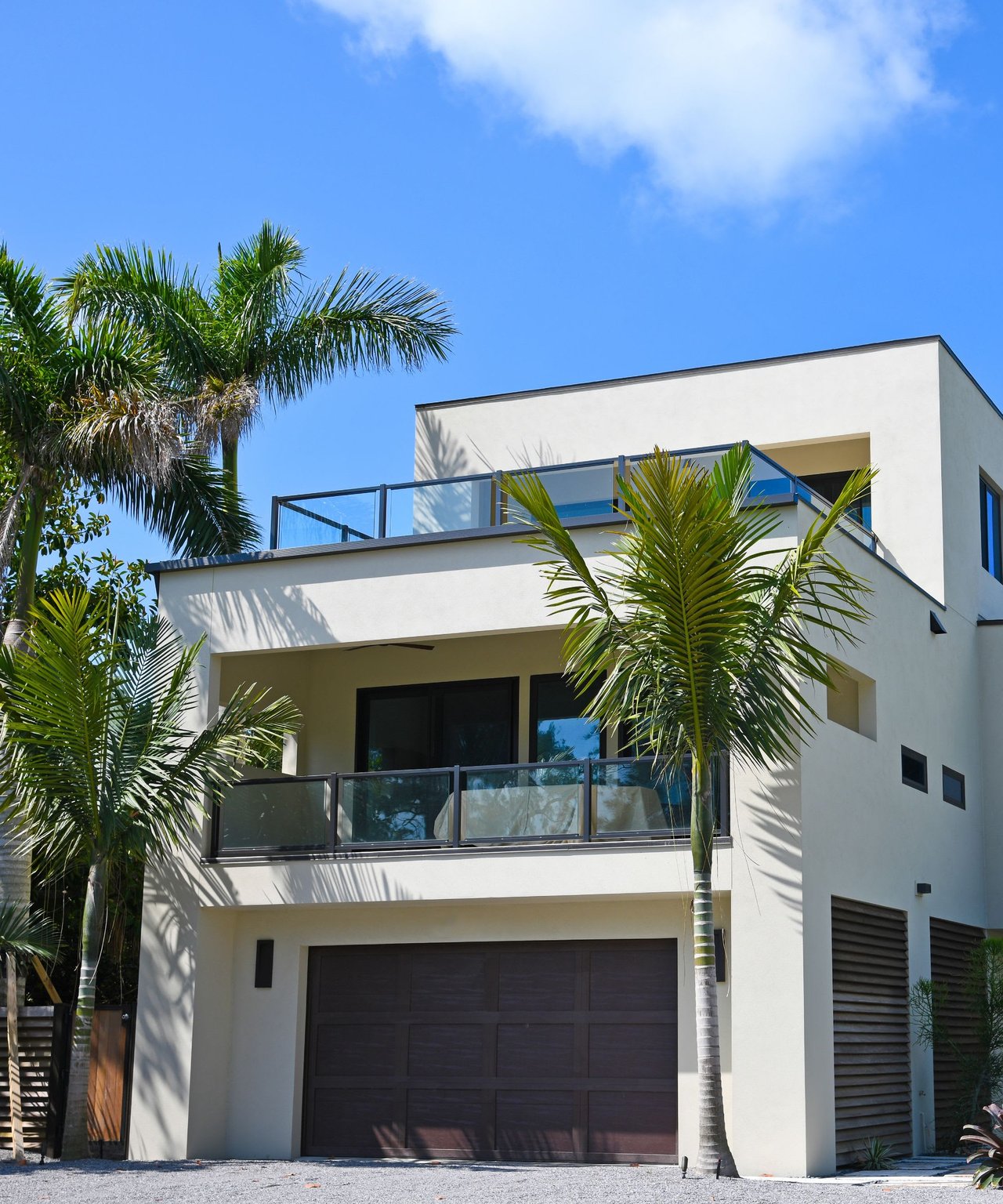
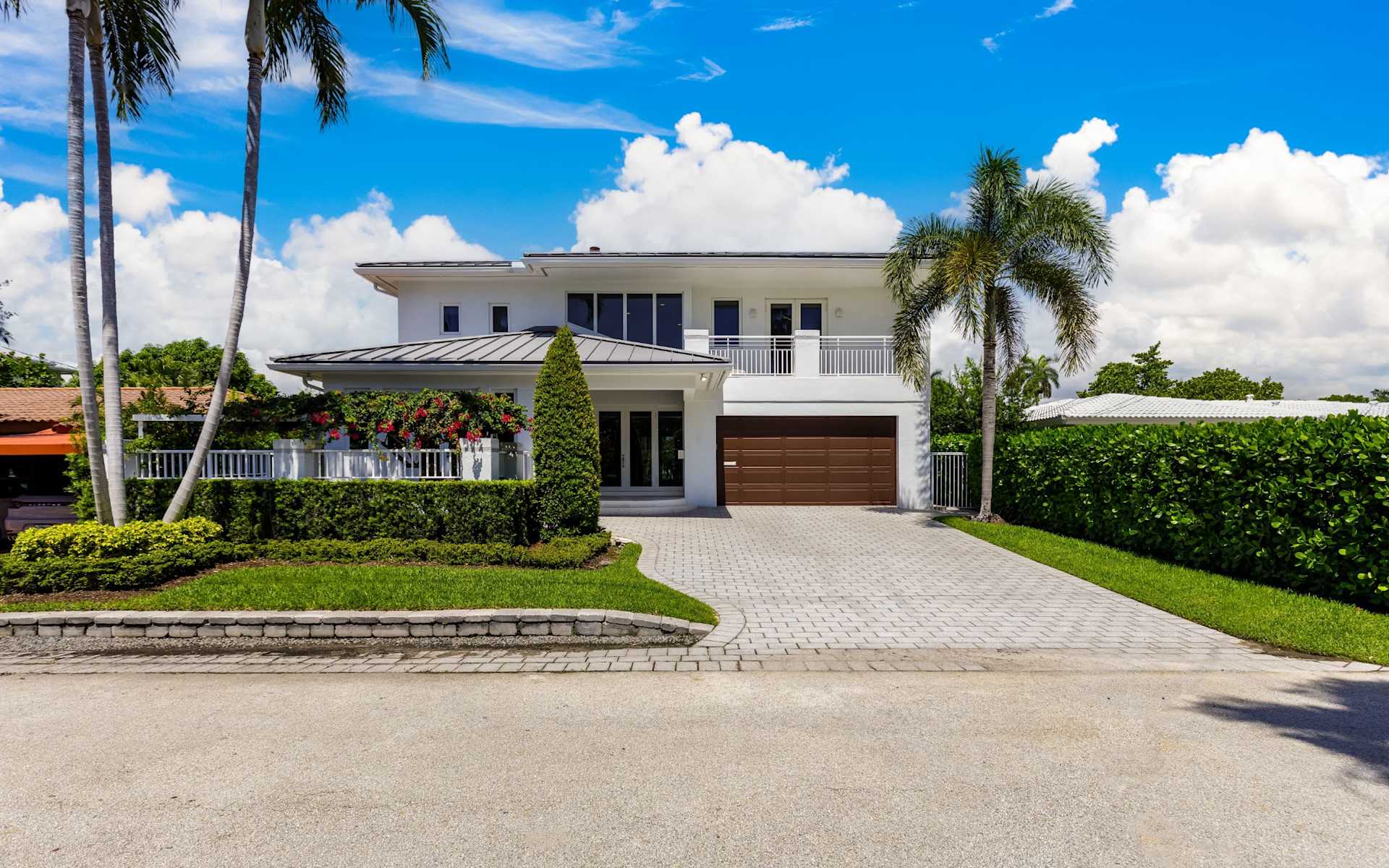
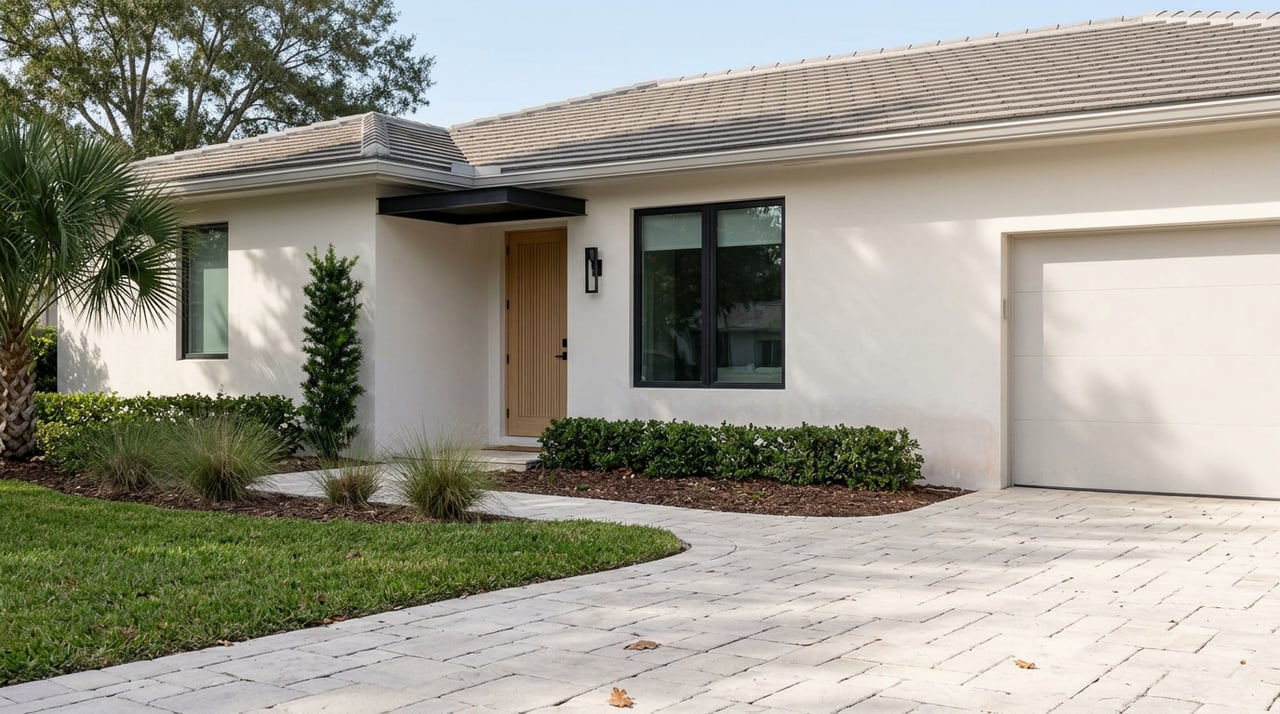
Say you're touring two homes in FishHawk Ranch. Same floor plan, same square footage, same list price down to the dollar. The listing agent hands you comps that look identical. Then you pull each property's Hillsborough County tax bill and find a line item that doesn't match at all: one home carries an annual assessment north of $2,000, the other barely clears $500. Nobody mentioned it during the showing, because it isn't part of the sale price. It's a Community Development District assessment, and it's the reason two houses that look the same on paper can cost different amounts to actually own.
This isn't a FishHawk Ranch quirk. It's how a large share of Hillsborough County's newer construction is financed, and it explains a pattern that trips up a lot of buyers comparing neighborhoods after they've already seen the county median price on a portal: the sticker price tells you almost nothing about what you'll actually pay every year to hold the property.
What a CDD Actually Is, and Why It Doesn't Work Like an HOA
A Community Development District is a special-purpose unit of local government created under Florida law, not a homeowners association. The distinction matters for how the money moves. An HOA is a private nonprofit that bills you directly for landscaping, pool upkeep, and architectural review. A CDD is a public entity with a board of supervisors, and its assessments show up as a non-ad valorem line on your annual Hillsborough County property tax bill, collected by the tax collector on the same schedule as your regular ad valorem taxes, with the same early payment discounts.
The CDD exists because a developer building a large master-planned community doesn't want to fund all the roads, stormwater systems, and amenity centers out of pocket before a single lot sells. Instead, the district issues bonds to pay for that infrastructure, and homeowners repay the bonds over time through the assessment. That assessment has two parts: a debt service portion that's fixed by the bond terms and shrinks as the bonds get paid down, and an operations and maintenance portion that fluctuates year to year based on the district's adopted budget.
Why the Bond's Age Matters More Than Whether One Exists
Here's the part that actually separates two homes in the same neighborhood. FishHawk Ranch's CDD isn't running on a single bond. Its finances page shows multiple bond series issued in different years, including a Series 2020 issue that refinanced earlier 2011 bonds and now matures on November 1, 2041. Other product types and phases within the same district carry their own separate series from 2013 and 2017. The district's FY2026 adopted assessment chart reflects that layering: per-unit totals range from roughly $529.66 to $2,096.93 a year, or about $44 to $175 a month, depending entirely on which product type and phase your specific lot falls into.
That range is the whole story. A home in an older FishHawk Ranch phase, where a bond series is already several years into its payoff schedule, can sit near the bottom of that range. A home in a phase where the debt service clock started more recently sits near the top. Same neighborhood, same school zone, same community amenities, different point on the amortization curve.
Waterset, the newer master-planned community farther south in Hillsborough County, runs on the identical mechanism through the Waterset Central Community Development District. Its bonds typically mature thirty years from issuance, and because Waterset is a younger community than FishHawk Ranch, more of its homes are sitting closer to the front of that thirty-year schedule, which means more of the assessment is still debt service rather than the leaner operations and maintenance charge that remains once a bond matures.
The Millage Trade-Off That a CDD Can Quietly Erase
There's a second layer to this that most buyers never connect to the first. Hillsborough County's combined effective property tax rate runs roughly 1.0 to 1.2 percent of market value, but where you sit inside the county changes that number. Properties inside Tampa's city limits pay an additional municipal millage on top of the countywide and school district rates, pushing the effective rate toward 1.10 to 1.20 percent. Unincorporated areas, including most of Brandon, Riverview, and Lutz, skip that city layer entirely and typically run closer to 0.90 to 1.05 percent. On a $450,000 home with a homestead exemption, that gap alone can mean roughly $4,200 to $4,800 a year inside Tampa versus something lower outside it.
That sounds like unincorporated Hillsborough is the cheaper play until you look at what many of those unincorporated new-construction subdivisions are financed with. Newer Riverview subdivisions inside CDD boundaries often carry a separate annual assessment in the range of $1,500 to $3,000, on top of the property tax bill. Add that to a home already sitting near the top of its bond's debt service curve, and the millage advantage of living outside Tampa's city limits can shrink or disappear. Meanwhile, older, established neighborhoods such as South Tampa, built before the CDD financing model became standard in the late 1990s, typically carry no CDD assessment at all. They pay the higher city millage, but there's no second line waiting on the tax bill.
Here's how that plays out across three real Hillsborough archetypes:
| Location type |
Property tax approach |
Typical annual CDD |
What it means for total carrying cost |
| South Tampa, pre-1990s neighborhood |
~1.10–1.20% effective rate, no CDD |
None |
Higher millage, but no separate assessment to track |
| FishHawk Ranch, older phase |
~0.90–1.05% effective rate |
Lower portion of the $530–$2,097/year range as bonds mature |
Millage savings mostly intact |
| Newer Riverview or Waterset-area phase |
~0.90–1.05% effective rate |
Often $1,500–$3,000/year while bonds are young |
Millage savings can be partly or fully offset |
None of these numbers make one location objectively better. They just mean the countywide home value you saw advertised, sitting around $372,800 as of June 30, 2026, or the higher Tampa city median of $475,000 over the three months ending July 2026, was never going to tell you which of these three you were actually comparing.
One More Charge People Confuse With This One
Buyers sometimes lump CDD assessments in with Hillsborough County's mobility and impact fees, but those are a different animal entirely. Impact fees are assessed against a builder before a permit is issued, a one-time cost tied to new construction or a remodel that increases usable area, and they're typically baked into the home's purchase price rather than showing up as an ongoing line on your tax bill. A CDD assessment is the recurring charge that keeps showing up every November for as long as the bonds are outstanding, or indefinitely for the operations and maintenance portion.
What to Actually Verify Before You Compare Two Listings
Florida law requires that an initial sales contract on a new home inside a CDD include a bold-type disclosure statement, so a buyer purchasing directly from a builder will see it in writing. That protection doesn't automatically extend to a resale. If you're comparing a five-year-old FishHawk Ranch resale to a new-construction Waterset home, the disclosure obligation looks different for each, which means the homework falls on you either way.
Before you treat two Hillsborough listings as comparable, pull these for each address:
- The non-ad valorem assessment line on the property's current tax bill, available through the Hillsborough County Tax Collector's records
- The district's most recent adopted budget and assessment chart, which spells out whether you're looking at debt service, operations and maintenance, or both
- A bond payoff quote from the district if you want to know exactly how many years of debt service remain
- Confirmation from your lender on whether the CDD will be escrowed with your property taxes or billed separately, since either can affect your monthly payment calculation
A Couple of Questions Worth Settling Early
Does paying off a CDD bond early lower the ongoing assessment? Paying off the debt service portion removes that piece of the annual charge, but the operations and maintenance assessment continues as long as the district exists, since that portion funds ongoing upkeep of roads, stormwater systems, and amenities rather than repaying construction debt.
Is a CDD assessment tax deductible? Because it's collected as a non-ad valorem assessment on the property tax bill, portions of it may carry different tax treatment than a standard ad valorem tax bill. This is a question for a tax professional, not a real estate agent, since the answer depends on your specific situation.
Compare the Real Number, Not the Listed One
The list price on a Hillsborough County home was never designed to tell you what you'll actually pay to hold it. Two homes at the same price, in neighborhoods that look interchangeable from the street, can carry meaningfully different annual costs depending on how old the bond is, how the district's O&M budget has trended, and whether you're inside or outside a city's millage. That's not a reason to avoid CDD communities. Many of them fund genuinely well-built infrastructure and amenities that older neighborhoods simply don't have. It's a reason to ask for the tax bill before you fall in love with the floor plan.
If you're weighing two Hillsborough neighborhoods and want someone to pull the actual assessment history before you write an offer, The Waugh Group can walk through the numbers with you and help you compare properties on what they'll really cost to own, not just what they're listed for. Reach out to schedule a free consultation.